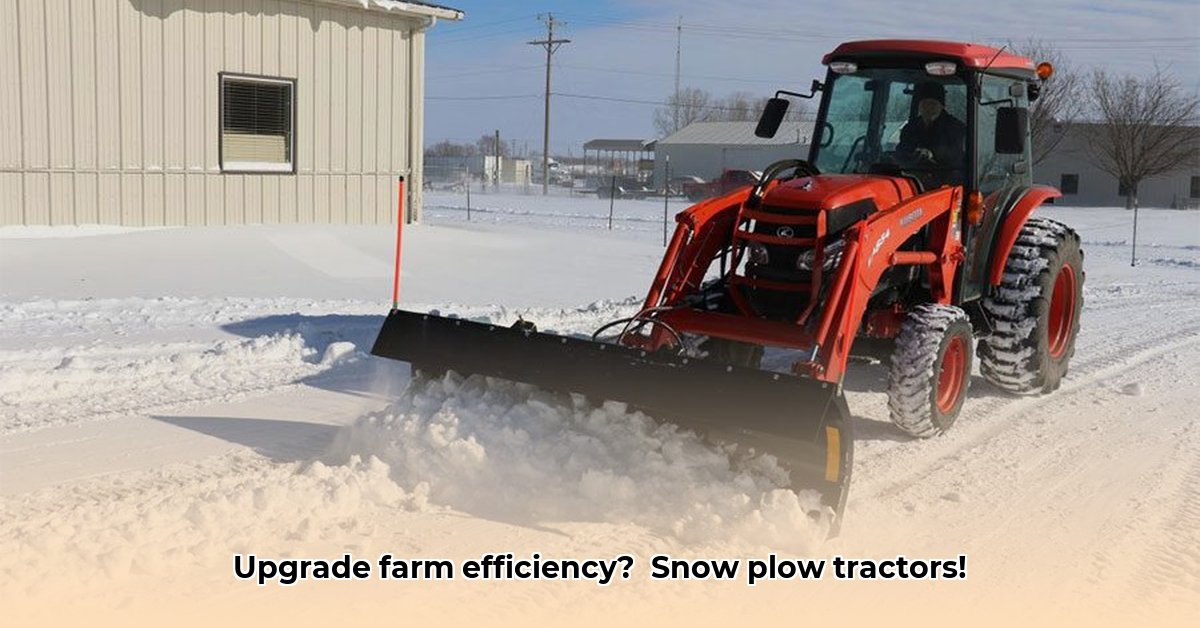
Winter's icy grip can significantly hinder farm productivity. However, by strategically utilizing your tractor for snow removal, you can maintain operational efficiency throughout the year. This guide provides actionable steps to effectively and safely clear snow, maximizing your farm's potential. We will discuss choosing the right tractor, mastering snow plow operations, understanding the economic implications, and mitigating potential risks. For more on compact tractors, see this helpful resource: compact tractor guide.
Choosing the Right Snow Plow Tractor: A Size-Matters Approach
Selecting the appropriate tractor is paramount for efficient snow removal. The ideal tractor depends on your farm's size and the typical severity of snowfall. A small farm with light snow may suffice with a smaller, less powerful tractor and a compact plow. Conversely, larger farms experiencing heavy snowfall demand a more robust machine capable of handling considerable volumes of snow.
Consider these key factors:
- Horsepower (HP): Higher horsepower equates to greater snow-clearing capacity. Overestimating horsepower needs is preferable to underestimating them.
- Attachment Compatibility: Ensure your tractor can accommodate various implements (e.g., blade plow, blower, ice melt spreader) depending on the weather conditions.
- Weight and Traction: Heavier tractors offer better traction, but excessive weight may compact soil. Consider your soil type and acceptable levels of compaction.
Here's a helpful size guide:
| Tractor Horsepower (HP) | Ideal Farm Size & Snowfall | Considerations |
|---|---|---|
| Under 50 | Small farms, light snowfall | May require chains or extra weights for improved traction. |
| 50-100 | Medium farms, moderate snowfall | Balances power and maneuverability effectively. |
| Over 100 | Large farms, heavy snowfall | High power, but mindful of potential soil compaction. |
Mastering Snow Plow Tractor Operations: Prioritizing Safety
Safe and effective operation is crucial for both personal well-being and maintaining equipment longevity. Efficient snow removal is only valuable if it doesn't compromise safety or lead to equipment damage.
Follow these steps for optimal snow removal:
- Pre-operation Inspection: Before each use, meticulously inspect fluids, tire pressure, and secure attachment connections. Proactive maintenance prevents costly repairs.
- Safe Driving Practices: Drive slowly and deliberately, avoiding jerky movements. Maintain consistent visibility.
- Attachment Adjustments: Adjust the plow's angle and height based on snow conditions (e.g., deeper angle for thick snow, shallower for light snow). Avoid overloading.
- Regular Maintenance Schedule: Implement a routine maintenance schedule to prevent breakdowns and extend the tractor's lifespan.
- Operator Training: Invest in formal training or mentorship from experienced operators to ensure proficient and safe operation. "Proper training is paramount for safe and effective tractor operation," states Dr. Emily Carter, Agricultural Engineering Professor at Purdue University.
The Economics of Snow Removal: Balancing Costs and Benefits
Investing in a snow plow tractor requires careful consideration of both initial and long-term costs versus the potential benefits.
Advantages:
- Increased Efficiency: Significantly faster snow removal compared to manual methods, saving valuable time.
- Year-Round Utility: Tractors are versatile tools used for various farm tasks throughout the year, maximizing return on investment.
- Labor Cost Reduction: Automated snow clearing minimizes the need for hired labor during winter.
Disadvantages:
- High Initial Investment: Tractors and attachments represent a substantial upfront cost.
- Ongoing Maintenance Expenses: Regular maintenance contributes to the overall operational cost.
- Potential for Soil Compaction: Heavy tractors risk soil compaction, potentially impacting crop yields. Consider lighter tractors or alternative techniques to mitigate this risk. Isn't minimizing soil compaction a critical aspect of sustainable farming practices?
Mitigating Risks: A Proactive Approach
Effective risk management is essential for successful snow plow tractor implementation.
- High Initial Cost: Explore financing options, leasing, or purchasing used equipment to reduce initial financial burden.
- Attachment Malfunctions: Regular maintenance and high-quality attachments minimize failure risks.
- Operator Error: Invest in comprehensive operator training and implement strict safety protocols.
- Soil Compaction: Use lighter attachments when possible, distribute tractor weight evenly, and minimize overlapping passes. How can we best balance efficient snow removal with the preservation of soil health?
By carefully selecting a tractor, mastering safe operating procedures, understanding the economic considerations, and adopting a proactive risk management approach, you can significantly improve your farm's efficiency during winter months. Snow plow tractors represent a valuable investment in your farm's long-term productivity.